- 817-587-4286
- info@treeservicegrapevinetx.com
- Mon - Sat: 9:00 - 18:00
Some Trees Raise the Question of Added Support
Tree Cabling and Bracing in Grapevine, TX
Large spreading limbs, several main stems, or a branch union you keep noticing can lead to a fair question: would supplemental support help, or is something else a better fit? Cabling and bracing may be considered for certain trees, based on what is actually there.
Call 817-587-4286 to request an estimate.
Ask About Support for a Specific Tree
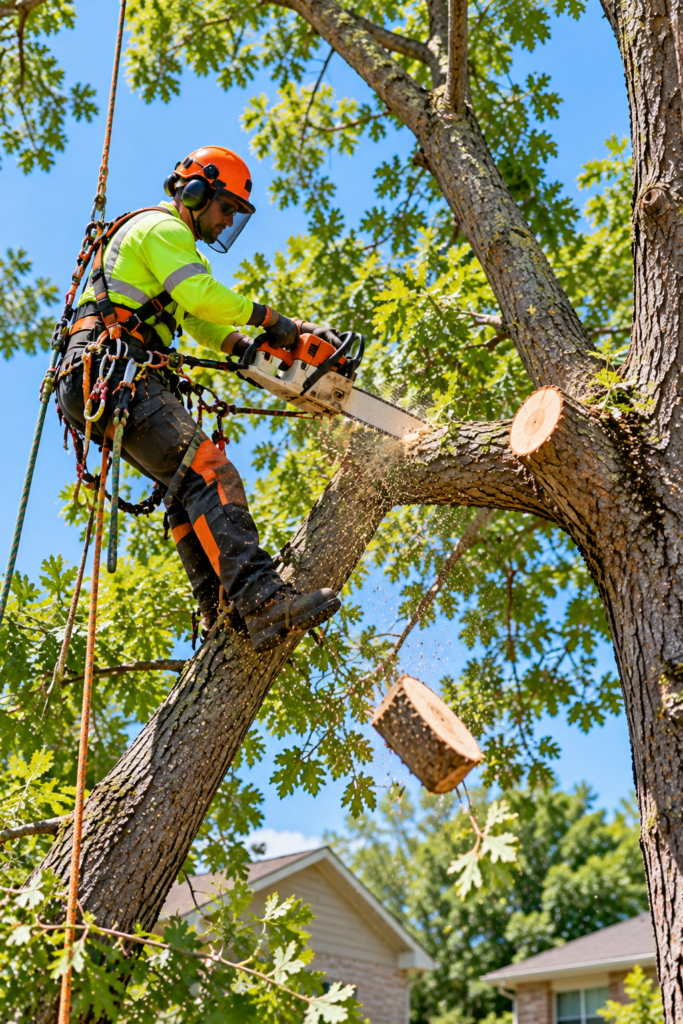
When Support Becomes Part of the Conversation
Property owners usually start asking about support after noticing something specific, such as:
- Large limbs that spread far from the trunk
- A tree with multiple main stems
- A branch union that looks tight or concerning
- Movement they have seen during wind
- A damaged branch arrangement after a storm
- A mature tree with heavy limbs over a yard or structure
These are reasons to take a closer look, not proof that a tree needs hardware. Plenty of trees have features like these, and each one has to be considered on its own.
Cables and Braces Do Different Jobs
Cabling and bracing are often mentioned together, but they are not the same thing. University of Massachusetts Extension describes cables as flexible and installed higher in the tree, while bracing uses rigid rods installed lower, near the area of concern. Both are forms of supplemental support.
Cable Systems
Flexible support between parts of the canopy, such as large limbs or stems, depending on the system and the goal.
Bracing
Rigid support associated with stems, trunks, or certain unions, depending on the situation. It is often paired with cabling.
Which One, If Either?
The choice depends on the tree, the part of concern, and the objective. Sometimes neither is the right answer.
Sometimes the Question Isn't "Can We Add a Cable?"
The better question is often: what are we trying to accomplish? Depending on what the tree actually shows, other work may be more relevant than support hardware, or may be considered alongside it:
- Selective pruning of specific branches
- Crown reduction to manage canopy size
- Deadwood removal
- Tree removal, in some situations
Cabling is not a substitute for every other tree service, and support hardware cannot save every tree. Which approach fits a particular tree depends on seeing it.
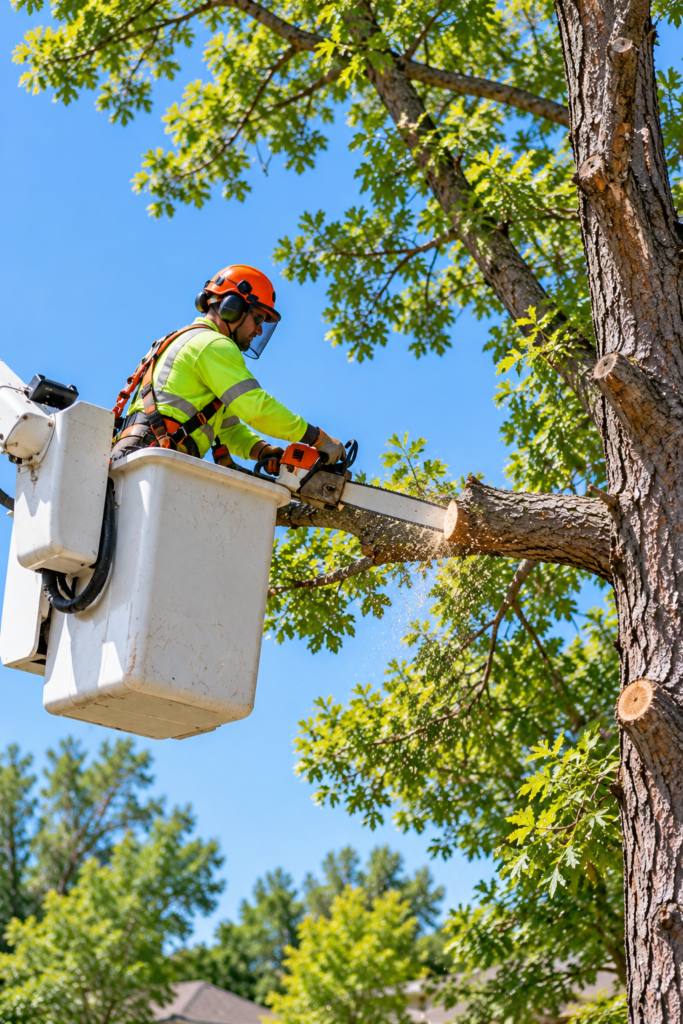
Support Is Not the Same as Making a Tree Failure-Proof
Cabling and bracing add supplemental support. They do not guarantee that a tree will never fail, that a branch will never break, or that a storm cannot damage the tree. UMass Extension puts it plainly: cabling is no guarantee that failure will not happen.
A supported part of a tree will not last forever, and other parts of the same tree can still develop problems. Support is one tool with limits, not a permanent fix.
What Should Be Considered Before Support Work?
Before any support work is planned, it helps to look at the bigger picture:
- Which part of the tree is creating concern
- How the branches and stems are arranged
- The visible condition of that area and any existing damage
- Nearby structures and how the yard is used
- Access for equipment and crews
- What the support is meant to accomplish
- Whether support hardware is already in the tree
- Whether other tree work is also being considered
This is part of practical planning for our tree services in Grapevine, not a formal risk assessment.
Existing Cables and Braces Should Not Be Forgotten
An installed support system should not be assumed to stay right for the tree forever. Trees keep growing, branch and stem structure changes, hardware ages, and storms can change things quickly. The reason for the support may change too.
UMass Extension recommends inspecting cables annually and notes they are replaced after 7 to 10 years. That is a useful reminder that support is an ongoing commitment, not a one-time job.
What About a Tree That Already Has Hardware?
If you have a tree with cables, rods, bolts, or other visible support hardware, perhaps one that came with the house, don’t assume the system is current, was installed correctly, is still appropriate, or makes the tree safe. You may not know when it was put in or why.
Leave the hardware alone. Don’t tighten, loosen, move, or remove cables or rods, and don’t drill or add hardware yourself. Instead, note what you can see from the ground and mention it when you ask about the tree.
Grapevine Weather and Supported Trees
Trees in North Texas live with a changing outdoor environment. The National Weather Service Fort Worth past event summaries document severe storms across the region, including a late-April 2026 stretch with numerous reports of large hail and wind damage. Texas A&M Forest Service also notes that drought is one of the biggest stresses on Texas trees and that stresses can build up over time.
None of that means cabling protects a tree from storms. It means a tree, and any support system in it, deals with wind, heat, and changing seasons. After strong weather, it is reasonable to have a supported tree looked at again.
Defining the Support Objective
Support work should have a clear purpose. A few questions help define it:
- What part of the tree is creating concern? A single limb and a whole stem are different conversations.
- Is support hardware already present? Existing hardware changes the starting point.
- Has something visibly changed? New damage or movement matters.
- Is pruning also being considered? Branch work and support are sometimes discussed together.
- What is nearby? Homes, driveways, and play areas shape the priorities.
- What outcome do you want? Keeping a tree, addressing a concern, or planning ahead.
Hardware without a defined objective is not a plan.
What Shapes a Cabling or Bracing Estimate?
There is no one-size price for support work. The scope depends on:
- Tree size and the number of stems or limbs involved
- Where the area of concern is in the tree
- Property and equipment access
- Any existing hardware
- The amount and type of support work
- Whether related pruning is part of the scope
- Surrounding structures
- The overall complexity of the agreed work
Call 817-587-4286 to request an estimate.
Related Tree Work May Have a Different Purpose
Support is only one way to address a concern. Depending on your goal, these services may be worth discussing:
- Tree pruning for selective branch work with a defined objective
- Crown reduction for managing overall canopy height or spread
- Tree inspection if you want visible conditions looked over first
- Tree removal when keeping the tree is not the right fit
Start With the Part of the Tree That Concerns You
Tell us which tree it is, what part you're looking at, whether it already has cables or rods, and whether anything changed recently. Mention nearby structures and any pruning or other work you're considering. Then call 817-587-4286 to request an estimate.
Questions About Supporting a Tree
Tree cabling uses flexible cables installed in the canopy to add supplemental support between parts of a tree, such as large limbs or stems.
Bracing uses rigid rods associated with stems, trunks, or certain unions. It is often used together with cabling.
No. Cabling adds supplemental support, but it does not guarantee that a branch or tree will not fail, especially in severe weather.
No. Multiple stems are common. Whether support is worth considering depends on the specific tree, its condition, and the objective.
Yes. Trees grow and hardware ages, and UMass Extension recommends inspecting cables annually. Please do not adjust hardware yourself.
Sometimes. Selective pruning may be discussed alongside support, or instead of it, depending on the goal.
No. Some trees are better served by other work, including removal. It depends on what the tree actually shows.
Ask About Cabling or Bracing
We’re dedicated to providing quality tree care for the Grapevine, TX area. We offer tree trimming, pruning, tree removal and stump grinding for homes and businesses. Our goal is to keep your property safe and your trees healthy. We plan every job with safety in mind and aim for clean, professional work. Whether you need routine care or emergency tree work, Tree Service Grapevine Texas is here to handle all your tree care needs with expertise and reliability.
CONTACT US
- Grapevine, Texas
- 817-587-4286
- info@treeservicegrapevinetx.com
- 9 AM to 6 PM (Monday to Saturday)
Copyright 2026 Tree Service Grapevine Texas| All RIghts Reserved