- 817-587-4286
- info@treeservicegrapevinetx.com
- Mon - Sat: 9:00 - 18:00
Start With the Branches That Are Bothering You
Residential Tree Trimming in Grapevine, TX
A limb stretching toward the roof, branches brushing the car in the driveway, growth crowding the patio or the path to the back gate. Residential tree trimming here focuses on the specific branches causing a concern around your home and yard, not a one-size trim for every tree.
Call 817-587-4286 to request an estimate.
Point Out the Branches and Request an Estimate
What Are the Branches Interfering With?
Before anything is cut, it helps to name what the branches are actually getting into. Around a home, that might be:
- The roof
- The driveway
- A walkway or path
- The patio
- A fence
- The lawn or a garden area
- Another tree
- A gate or side-yard access
Then comes the real question: what do you want to change? A branch being close to something is not, by itself, a reason to cut it.
Clearance Around a Home Should Have a Purpose
Clearance work makes sense when there is a clear goal behind it. That might be a branch reaching toward the house, limbs hanging over a spot the family uses every day, low growth you keep ducking under, or branches that get in the way of pulling into the driveway.
There is no single clearance number that fits every home. The right amount depends on the branch, the tree, and what you use that space for, and a branch over a roof, driveway, or walkway is not automatically a hazard.
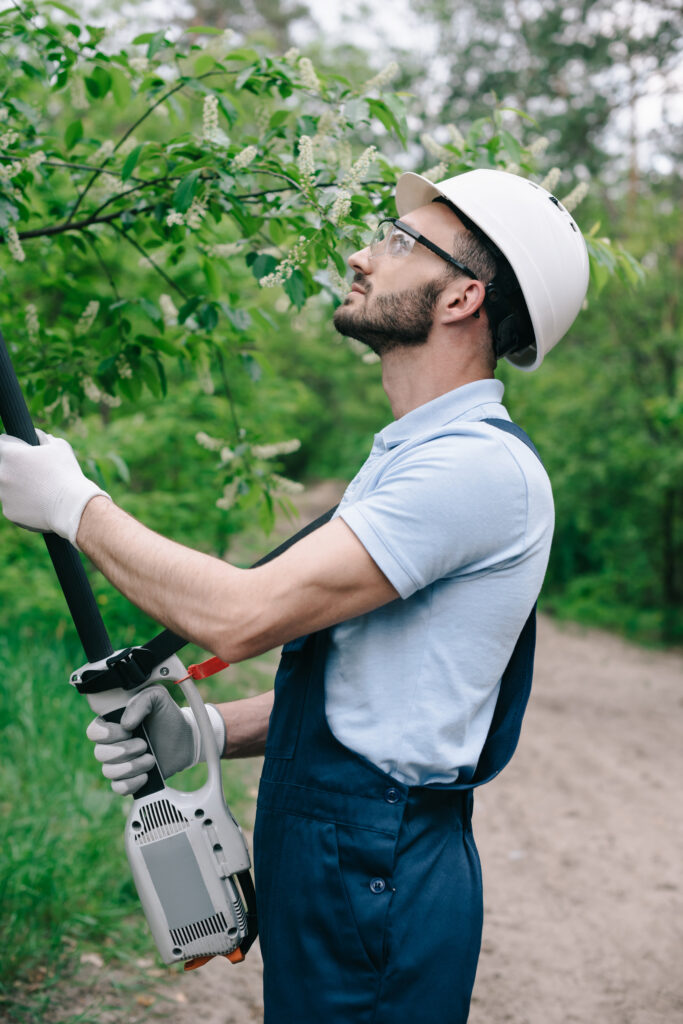
Not Every Branch Concern Is the Same Kind of Tree Work
“Trimming” gets used for a lot of different jobs. Matching the concern to the right service keeps the work focused:
- Tree trimming: general branch management for a practical goal
- Tree pruning: more specific, selective pruning objectives
- Deadwood removal: dead branches only
- Tree shaping: form and appearance
- Crown raising: lifting the lowest limbs to open space underneath
- Crown reduction: making the whole canopy smaller where that suits the tree
- Crown thinning: easing a crowded canopy while keeping its size
These are not interchangeable, and one yard may need only one of them, or none.
The Roof Is Part of the Property Context, Not a Reason to Over-Trim
Branches near the roof are one of the most common reasons homeowners call. Even so, a limb over the roof does not automatically damage it, and not every overhanging branch needs to come off. A tree near the house is not unsafe just because of where it stands.
What matters is where the branch actually is and what you want to achieve. Trimming can’t guarantee roof protection or prevent storm damage, and roofing questions belong with a roofing professional.
Driveways and Walkways Are Everyday Clearance Areas
The spaces you move through every day are where low or spreading branches get noticed first. Common goals include:
- Keeping a walking route under the tree comfortable to use
- Pulling in and out of the driveway without scraping
- Reaching the side yard, trash cans, or back gate
- Moving around the yard without ducking
How much clearance is right depends on the tree and the space, not on a universal height.
Fences and Neighboring Property Need Clear Work Limits
Branches often cross a fence or hang over a neighbor’s yard, and some trees sit right on a line that looks shared. Work near those edges needs clear limits before it starts.
Crews shouldn’t plan on cutting from next door unless that is settled first. This page also leaves out surveying, deciding legal property lines or tree ownership, settling disputes, getting a neighbor’s permission, or legal advice.
Landscaping Can Change How the Work Area Is Approached
Garden beds, shrubs, lawns, planted areas, and decorative features around a tree all affect how crews set up and where cut branches land. Point out anything you especially want to protect.
Falling branches and foot traffic can still leave marks on grass or beds, and repairing landscaping falls outside this page.
More Trimming Is Not Automatically Better
A tree that has had more branches removed is not a better-trimmed tree. The goal is to address the concern, then stop.
Too Much Canopy
Taking off far more leafy growth than the goal needs, or cutting branches without a clear reason.
Stripped Interiors
Clearing out the inside of the canopy until only tufts remain at the branch ends, a habit known as lion-tailing.
Cutting to Shrink
Chopping branches back just to make a tree look smaller, which drifts toward topping.
Tree Topping Is Not the Same as Residential Tree Trimming
Topping cuts a tree back to a few large branches, and it should not be passed off as normal trimming. The Texas A&M AgriLife Earth-Kind pruning guide says topping is not a recommended practice. It explains that the regrowth comes in bushy and upright, that the weakly attached new shoots can break off in severe wind or rain, and that topping can leave a tree more open to insects and disease.
If making a tree smaller is the goal, that is a conversation about the right selective approach, not about stubbing it back.
Trimming Should Not Follow a Made-Up Calendar
You may hear that every tree needs trimming every year, or that one season is always right. Neither holds up as a blanket rule. Timing can depend on:
- What the trimming is meant to accomplish
- The kind of tree
- Branch condition and recent growth
- Local weather and conditions
Some residential trees can go a long time without any branch work at all.
Overhead Power Lines Change the Situation
If branches are touching or growing near power lines, don’t try to cut them yourself or send anyone up a ladder to do it. Texas A&M Forest Service specifically warns homeowners against removing limbs on or near power lines.
Branches near the lines are a matter for your electric utility, and a downed line is a 911 call. Line-clearance work is not something this page offers.
Grapevine Growth and Local Conditions
Grapevine’s tree preservation ordinance, Section 52, is worth knowing about even for routine trimming. As posted on the city’s Tree Preservation page, its general coverage leaves out yard areas of owner-occupied single-family homes, and it says it is not meant to require a permit for reasonable pruning that has nothing to do with construction.
A couple of provisions still touch ordinary homeowners. Topping a tree as a regular habit is not allowed under the ordinance, and trees next to a public street are expected to be kept trimmed so there is a 10-foot opening above the street pavement or curb. Rental homes fall under the ordinance more broadly. None of this is legal advice, so reach out to Grapevine Planning Services if your situation is unclear.
What Happens to the Cut Branches?
Every trimming job leaves branches, smaller limbs, and woody debris behind. Plan for that pile ahead of time: the estimate should say how the branches will be dealt with.
Don’t assume a particular method. If you have a preference for where branches go or how the yard should look when the crew leaves, say so when you ask for the estimate.
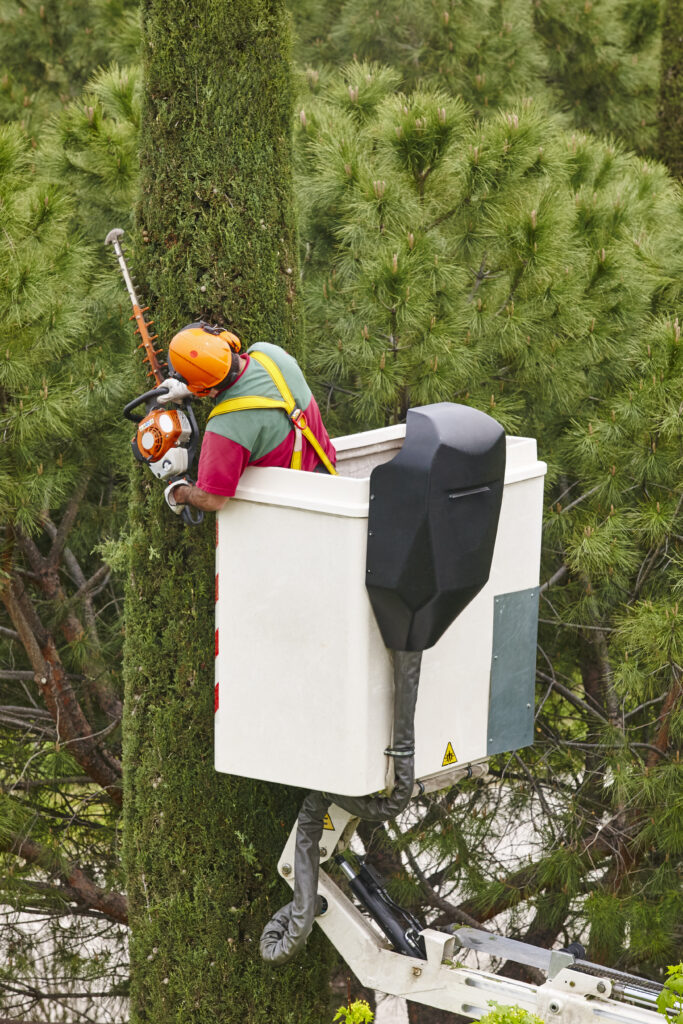
What Shapes a Residential Tree Trimming Estimate?
Every home is scoped on its own. The estimate depends on details like:
- Tree size and how many trees are involved
- How much branch work, and what kind
- Where the branches are in relation to the house
- Front yard or backyard, and access
- Nearby structures, fences, and gates
- Landscaping and terrain
- How cut branches will be handled
Call 817-587-4286 to request an estimate.
When the Job Is More Specific Than General Trimming
If your goal is narrower, these pages go into more detail: tree trimming in general, tree pruning for selective objectives, deadwood removal for dead branches, and crown raising for lower-branch clearance. For everything else, see our tree services in Grapevine.
Show Us Which Branches Are Causing the Problem
Tell us which tree it is, where it sits in the yard, and which branches concern you. Mention what they're near, the clearance or result you want, how the area is reached, fences and gates, plantings that matter to you, any wires you notice overhead, and what should happen to the cut branches. You don't have to know what's wrong with the tree. Call 817-587-4286 to request an estimate.
Residential Tree Trimming Questions
No. Closeness to a house is not a reason on its own. Trimming makes sense when a branch is causing a specific concern you want addressed.
Not always. It depends on where the branch is and what you want to accomplish. Overhanging branches are not automatically a problem.
They overlap. Trimming here means general branch management, while pruning usually refers to more specific, selective objectives.
Often, yes. The right amount depends on the tree and how you use the space, and crown raising may be the better fit for lower-canopy clearance.
No calendar fits every yard. One tree may need branch work soon, while the next can go years without it.
No. Topping cuts a tree back to a few large branches. Texas A&M AgriLife’s Earth-Kind guidance says it is not a recommended practice.
Keep clear and contact the electric utility. Branches near energized lines are not a homeowner job.
Request a Residential Tree Trimming Estimate
We’re dedicated to providing quality tree care for the Grapevine, TX area. We offer tree trimming, pruning, tree removal and stump grinding for homes and businesses. Our goal is to keep your property safe and your trees healthy. We plan every job with safety in mind and aim for clean, professional work. Whether you need routine care or emergency tree work, Tree Service Grapevine Texas is here to handle all your tree care needs with expertise and reliability.
CONTACT US
- Grapevine, Texas
- 817-587-4286
- info@treeservicegrapevinetx.com
- 9 AM to 6 PM (Monday to Saturday)
Copyright 2026 Tree Service Grapevine Texas| All RIghts Reserved