- 817-587-4286
- info@treeservicegrapevinetx.com
- Mon - Sat: 9:00 - 18:00
Leftover Roots and Live Roots Call for Different Plans
Tree Root Removal in Grapevine, TX
Some roots are what’s left after a tree or stump is gone. Others still belong to a tree standing in your yard. Those are very different jobs, and the right scope for tree root removal starts with knowing which one you have and how you want to use the area.
Call 817-587-4286 to request an estimate.
Tell Us Where the Roots Are and Request an Estimate
First Question: Is the Tree Still Standing?
Roots attached to a living tree are working parts of that tree. Penn State Extension explains that roots anchor a tree, absorb water and nutrients, and exchange gases with the soil. Texas A&M Forest Service lists root severance, along with soil compaction and grade changes, among the main causes of tree death during and after construction.
That means a root is not automatically safe to cut just because it is visible, crosses the lawn, sits near pavement, or is simply in the way. Whether a specific root on a standing tree can be removed is not something to decide from a phone call or a photo.
Roots left after a tree has already come down are a different situation. The tree no longer depends on them, so the question becomes how much of that leftover material needs to go for your plans.
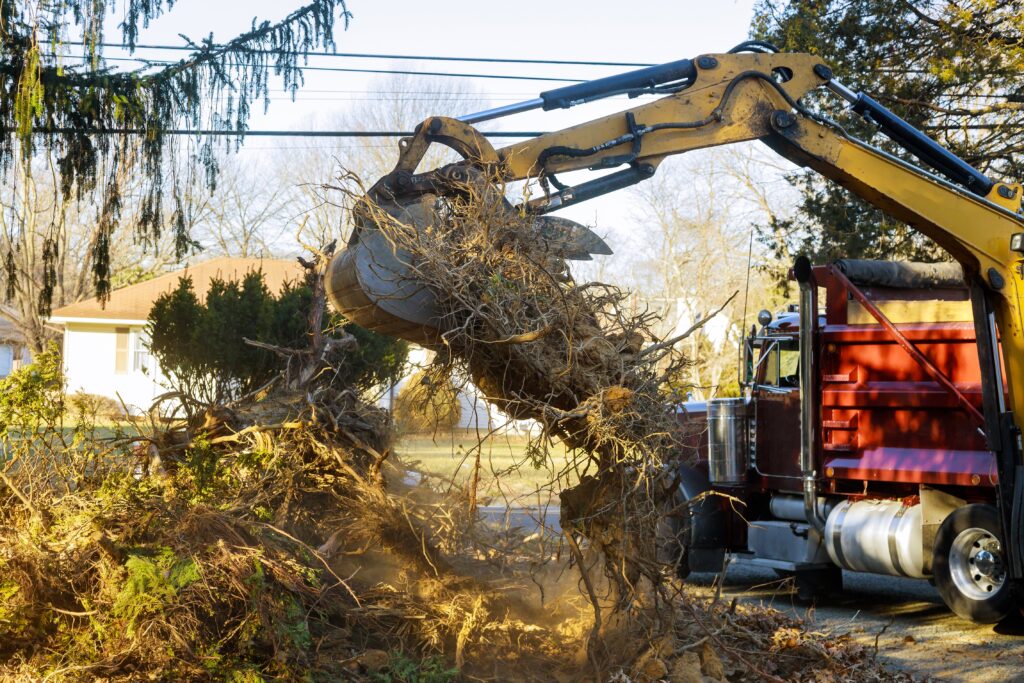
Roots Left Behind After Tree or Stump Work
Taking down a tree does not take its root system with it. Much of it stays in the soil. Stump grinding does not clear every root either. It works on the stump itself, and much of the wider root system is left in the ground.
Leftover root material can become a concern when:
- Root crown material remains around the old stump area
- Larger roots sit near the surface where the tree used to be
- Roots turn up during later landscaping or property work
- The area is planned for a garden bed, new planting, or another use
Root removal in these cases targets the material that matters for the project. It does not mean every small root is pulled from the soil, and digging out a mature tree’s entire root system is often not practical.
Root Removal, Stump Removal, or Stump Grinding?
These three services can overlap on the same property, but they are not interchangeable. Each one deals with a different part of what a tree leaves behind, so knowing the difference helps you ask for the right work.
Tree Root Removal
Addresses selected root material, such as larger roots in a planned work area, based on the scope agreed for your project.
Stump Removal
A more extensive job focused on the stump and root crown area, where that approach suits the site.
Stump Grinding
Grinds the stump down to around or below ground level per the agreed scope. Much of the wider root system generally stays in the ground.
When Roots and Property Features Meet
Roots usually become a concern when you want to change or use part of your property. They may be encountered in areas where work is planned, such as:
- Lawn areas and landscaping beds
- Planned planting areas
- Along fences
- Near walkways, driveways, and patios
- Around other hardscape
- Construction or excavation areas
A root sitting close to a feature does not prove that the root damaged it. Cracks, shifting, and uneven surfaces can have many causes. Root work is planned around what you want to do with the space, not around guesses about what caused an existing problem.
What Root Removal Does Not Automatically Fix
Removing tree roots should not be treated as a guaranteed fix for foundation problems, cracked concrete, sewer or plumbing issues, drainage trouble, soil movement, or structural damage. It also does not reverse damage that already exists.
If you are dealing with one of those problems, an evaluation by a qualified professional in that field is the right place to start. Once the cause is understood, root work may or may not be part of the answer.
Before Any Digging: Check for Underground Utilities
Root removal often means digging, and buried utilities can share the same soil as old roots. Texas 811 states that Texas law requires excavators to contact 811 at least two business days before excavating, excluding weekends and holidays, even when the work is in your own backyard.
Public utility companies notified on the 811 ticket mark their lines. However, the Texas 811 homeowner FAQ notes that public utilities may not mark lines that run from the meter onto private property or to the house. Getting those private lines marked before digging is the responsibility of the property owner or excavator.
If you know where private lines, irrigation, or other buried features are, mention them when you describe the project.
How Much Root Material Actually Needs to Go?
A good scope starts with your goal, not with removing every root you can see. A root in the way of a new flower bed may call for a very different plan than roots in an area planned for hardscape.
Things that shape how much root material is included:
- Whether the tree is standing or already removed
- Where the roots are and how large they are
- How deep they run and how easy they are to reach
- Any remaining stump or root crown
- Nearby structures, hardscape, and utilities
- Terrain and equipment access
- What the area will be used for next
What a Root-Removal Project May Involve
Every job depends on the site and the agreed scope. In general terms, a root-removal project may include:
- Identifying the root material of concern
- Confirming whether the related tree is standing or already removed
- Reviewing access and any limits on excavation
- Accounting for underground utility location requirements
- Defining which root material is included
- Deciding how debris will be handled
- Reviewing the estimate
- Completing the agreed work
Grapevine Soil, Trees, and Local Conditions
Soil can vary from one yard to the next around Grapevine. The Botanical Research Institute of Texas notes that Tarrant County sits on shale, limestone, and sandstone bedrock and has many different soil types as a result. It also describes some of the area’s clay soils as holding moisture and draining slowly.
Those differences can matter for root work. Soil type and moisture can affect how easily roots can be reached and how an area handles digging. Texas A&M AgriLife Extension horticulture guidance also notes that lowering the grade around a tree exposes its roots and reduces the nutrients and moisture available to them, one more reason work near a standing tree calls for care.
No one can know a property’s soil from its address alone. Conditions on your site are part of what gets reviewed when the scope is set.
What Shapes the Scope of a Root Removal Estimate
There’s no set price for root work because no two jobs are the same. The estimate follows the scope, and the scope depends on details like:
- A standing tree versus one that was already removed
- Root size, depth, and amount of material
- Accessibility and equipment access
- Soil and excavation conditions
- Nearby hardscape, fences, and structures
- Underground utilities
- Remaining stump or root crown material
- Debris handling
- The project area and your overall goal
Root removal is one of the tree services in Grapevine we provide for homes and businesses. Call 817-587-4286 to request an estimate.

Related Services When the Root Isn't the Whole Story
Sometimes the roots are only part of the job. If a stump is still in place, stump grinding can bring it down near or below ground level, while stump removal goes further into the stump and root crown area. If a standing tree is the real concern, tree removal may be worth discussing. We can help you sort out which service, or combination, fits your goal.
Start With the Roots and What the Space Is For
Tell us whether the tree is still standing, whether a stump was removed or ground, where the roots are, what you want to do with the area, and what hardscape, structures, or access limits are nearby. Then call 817-587-4286 to request an estimate.
Root Questions Property Owners Often Ask
Not automatically. Roots anchor a living tree and take up water and nutrients, so cutting them can affect its stability and health. Whether any root can be removed depends on the tree and the site, and it cannot be decided remotely.
Not all of them. Stump grinding reduces the stump to around or below ground level according to the agreed scope. Much of the wider root system generally stays in the soil.
Stump removal focuses on the stump and root crown area. Root removal addresses selected root material, which may be away from the stump, based on the project scope.
No. Small roots spread through the soil, and digging out a mature root system completely is often not practical. The work focuses on the root material that matters for your goal.
Texas 811 states that Texas law requires excavators to contact 811 at least two business days before excavating, excluding weekends and holidays, even in your own backyard. Public utilities may not mark private lines on your property.
It should not be counted on to. Roots near a crack do not prove they caused it, and root removal does not repair existing damage. Structural, plumbing, or drainage concerns should be evaluated by a qualified professional in that field.
Whether the tree is standing, root size and depth, how much material is involved, access, soil conditions, nearby hardscape and structures, utilities, any remaining stump, and debris handling. Call 817-587-4286 to request an estimate.
Request a Tree Root Removal Estimate
We’re dedicated to providing quality tree care for the Grapevine, TX area. We offer tree trimming, pruning, tree removal and stump grinding for homes and businesses. Our goal is to keep your property safe and your trees healthy. We plan every job with safety in mind and aim for clean, professional work. Whether you need routine care or emergency tree work, Tree Service Grapevine Texas is here to handle all your tree care needs with expertise and reliability.
CONTACT US
- Grapevine, Texas
- 817-587-4286
- info@treeservicegrapevinetx.com
- 9 AM to 6 PM (Monday to Saturday)
Copyright 2026 Tree Service Grapevine Texas| All RIghts Reserved