- 817-587-4286
- info@treeservicegrapevinetx.com
- Mon - Sat: 9:00 - 18:00
Canopy Form That Fits the Tree
Tree Shaping in Grapevine, TX
Tree shaping manages how a tree’s canopy and branches grow. Selected branches are shortened or removed to address uneven growth, improve clearance, or give the canopy a more balanced look, while keeping the tree’s natural form.
For tree shaping in Grapevine TX, call 817-587-4286 to describe your tree and request an estimate.
Describe Your Tree and Request an Estimate
What Is Tree Shaping?
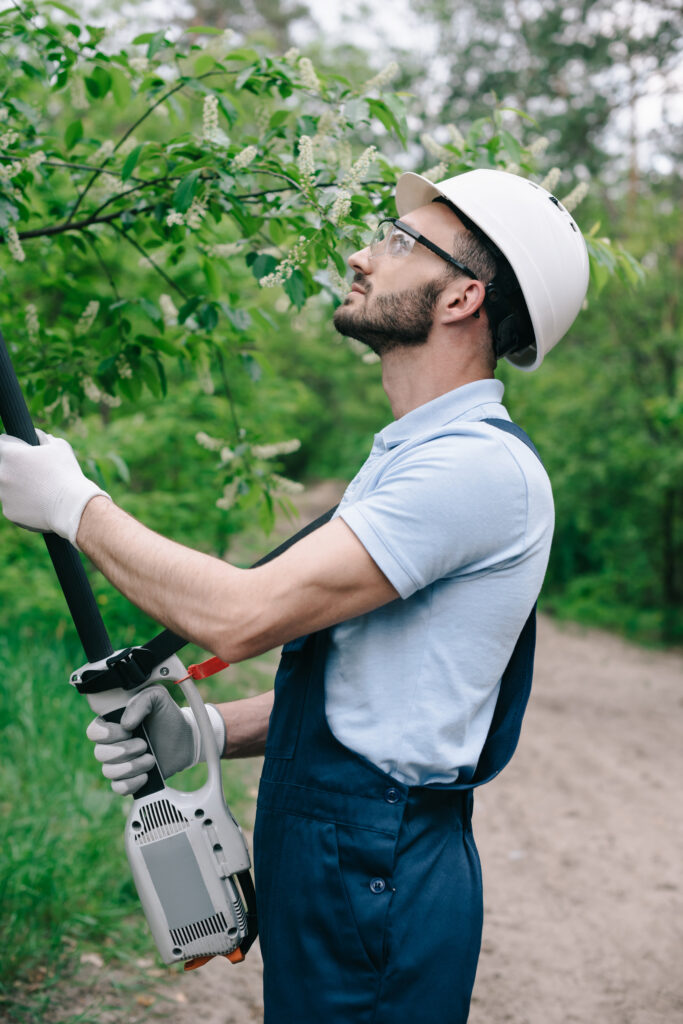
Tree shaping is selective branch management focused on canopy form. The goal is to guide how the tree looks and grows: its balance, its outline, and how its branches relate to the space around it. That can mean easing a lopsided canopy, pulling back a branch that has grown out too far, or opening room near a walkway.
Good shaping works with the tree’s existing branch structure. An oak, an elm, and a crape myrtle grow differently, so each has its own natural form. Shaping does not mean cutting every tree into the same outline, and it does not promise perfect symmetry. It aims for a canopy that looks balanced for that kind of tree.
Shaping is one of the tree services we offer for residential trees and commercial properties.
Tree Shaping vs. Trimming, Pruning, and Deadwood Removal
These services can overlap, and one visit may include more than one. They are not the same, though. Shaping focuses on canopy form, appearance, balance, and selected clearance goals while respecting natural growth. Deadwood removal targets dead branches only.
Which one fits depends on the tree and your goal. If the main concern is how the canopy looks or grows, shaping is a good place to start. If the concern is a broken limb, crossing branches, or general upkeep, another scope may fit better.
Tree Shaping
Guides canopy form and balance with selective branch work while keeping the tree’s natural outline.
Tree Trimming
Tree trimming covers broader, routine branch and canopy management around the property.
Tree Pruning
Tree pruning removes selected branches for defined goals such as structure, clearance, or damaged and crossing limbs.
Why Tree Shaping May Be Considered
Shaping may be considered when branch growth becomes uneven, when a few branches extend well past the rest of the canopy, or when limbs crowd a roof, driveway, or yard area you use. It can help keep a more balanced appearance and reasonable clearance. On younger trees, shaping may help guide how the canopy develops. On mature trees, the goal is usually to keep the tree’s recognizable form while managing selected branches. Shaping does not prevent branch failure or storm damage.
Natural Form vs. Tree Topping
Tree shaping should not be confused with topping, which cuts large branches back to stubs to make a tree shorter. In its guidance on storm-damaged trees, Texas A&M Forest Service advises against topping. It explains that the stubs tend to grow lots of weakly attached branches that are more likely to break, and that topping reduces the foliage a tree depends on for regrowth. Careful shaping keeps healthy branches where possible and works with the tree’s structure instead of cutting to an arbitrary height or outline.
Shaping Young Trees in Texas
Texas A&M Forest Service notes that pruning young trees correctly helps create a strong structure and good form, and that trees pruned properly while young need less corrective pruning later. The agency recommends keeping branches balanced, with some growing in every direction, and says hedge shears are not suitable for shaping or pruning trees. For newly planted trees, it advises removing only dead or broken branches and waiting until the second or third year for other pruning. See the Texas A&M Forest Service guide to pruning young trees for more.
What Affects the Estimate
The scope depends on the tree species and its natural growth habit, the size and maturity of the tree, and the canopy structure. Branch location, the clearance you want, and how much shaping is planned also matter. Nearby structures, driveways, walkways, access, the tree’s current condition, equipment access, the number of trees, and debris handling are part of the scope too.
How a Shaping Job Usually Comes Together
- Discuss the outcome you want.
- Review the tree and surrounding property where appropriate.
- Consider the natural canopy form and practical clearance.
- Define the proposed shaping scope.
- Review the estimate.
- Schedule the agreed work.
- Complete the agreed branch work.
- Handle debris as agreed in the scope.
Call 817-587-4286 to request an estimate.
Tree Shaping Questions
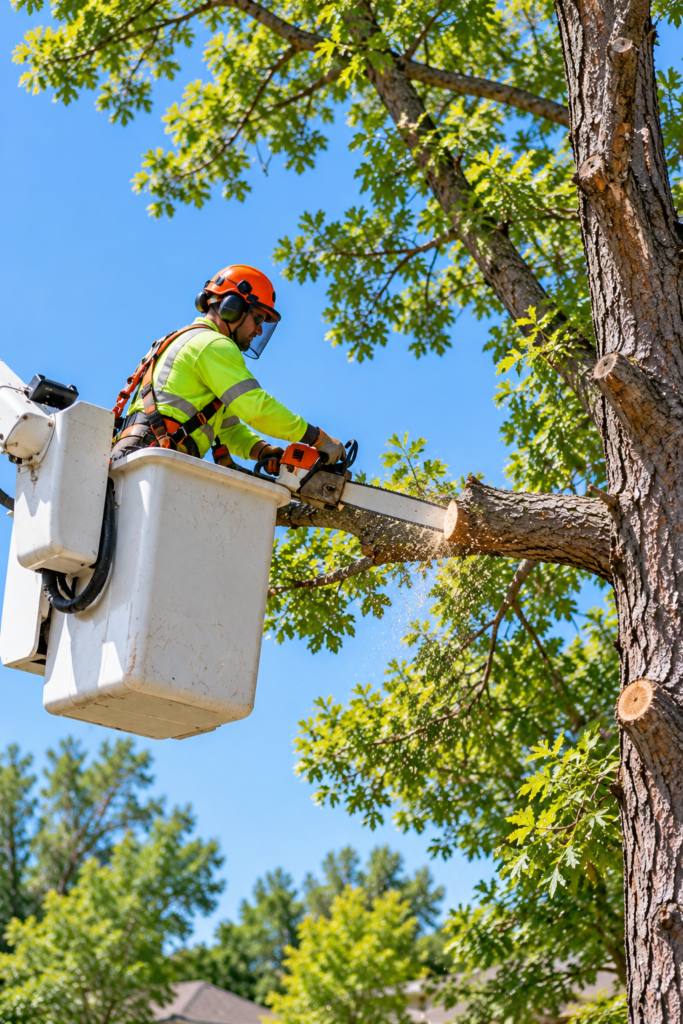
It is selective branch management focused on canopy form, balance, and clearance. It works with the tree’s natural structure rather than cutting it into an arbitrary outline.
Tree trimming is broader, routine branch and canopy upkeep. Shaping focuses on how the canopy looks and grows, such as uneven growth or an overextended branch. The difference between shaping and trimming comes down to the goal behind each cut.
Not exactly. Shaping uses selective pruning, but its main goal is form, appearance, and balance. Tree pruning covers broader defined goals such as structure or damaged and crossing branches.
No. Topping cuts large branches back to stubs. Texas A&M Forest Service advises against topping because the stubs tend to regrow weakly attached branches. Shaping works with the tree’s natural structure.
Yes. Selected branches near a roof, driveway, or walkway can be shortened or removed as part of the agreed scope. If raising the lower canopy is the main goal, crown raising may be a better fit.
Tree size, species and growth habit, canopy structure, branch location, the amount of shaping, desired clearance, access, nearby structures, the number of trees, equipment needs, and debris handling all shape the estimate.
Often, yes, through selective branch work that keeps the overall outline. Large changes to a mature canopy are usually not the goal, and results depend on the tree’s structure and condition.
Request a Tree Shaping Estimate
We’re dedicated to providing quality tree care for the Grapevine, TX area. We offer tree trimming, pruning, tree removal and stump grinding for homes and businesses. Our goal is to keep your property safe and your trees healthy. We plan every job with safety in mind and aim for clean, professional work. Whether you need routine care or emergency tree work, Tree Service Grapevine Texas is here to handle all your tree care needs with expertise and reliability.
CONTACT US
- Grapevine, Texas
- 817-587-4286
- info@treeservicegrapevinetx.com
- 9 AM to 6 PM (Monday to Saturday)
Copyright 2026 Tree Service Grapevine Texas| All RIghts Reserved