- 817-587-4286
- info@treeservicegrapevinetx.com
- Mon - Sat: 9:00 - 18:00
Managing Canopy Size While Keeping the Tree
Crown Reduction in Grapevine, TX
Some trees outgrow the space around them. Branches reach toward the house, stretch over a neighbor’s yard, or push the canopy wider than the site can comfortably hold. Crown reduction selectively shortens chosen branches to manage the height or spread of the canopy while keeping the tree’s natural form.
For crown reduction in Grapevine TX, call 817-587-4286 to describe your tree and request an estimate.
Describe Your Tree and Request an Estimate
What Is Crown Reduction?
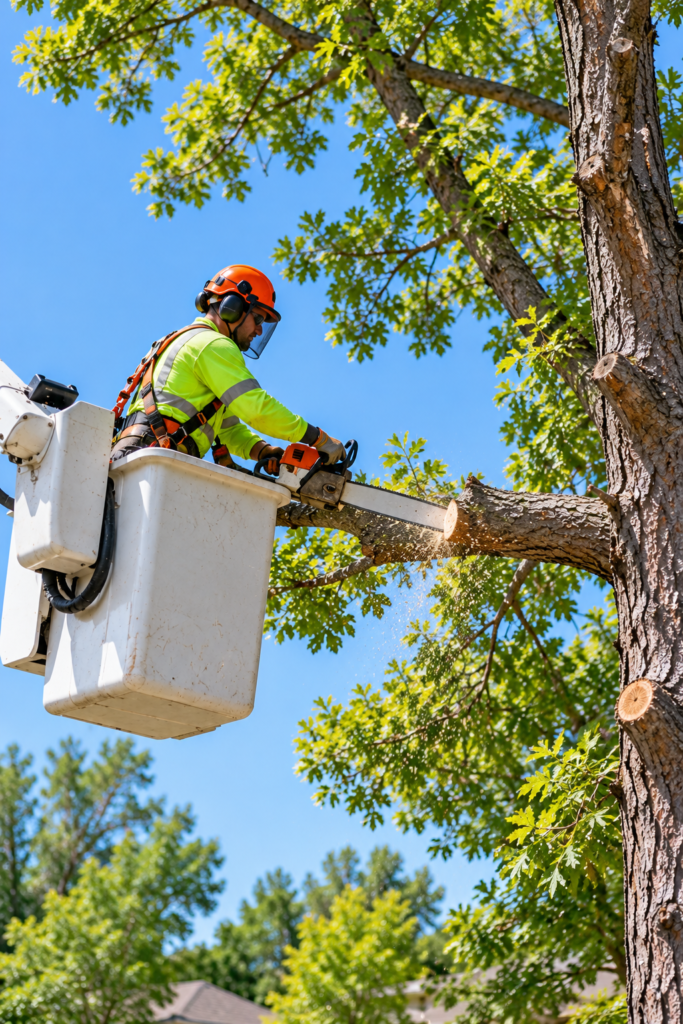
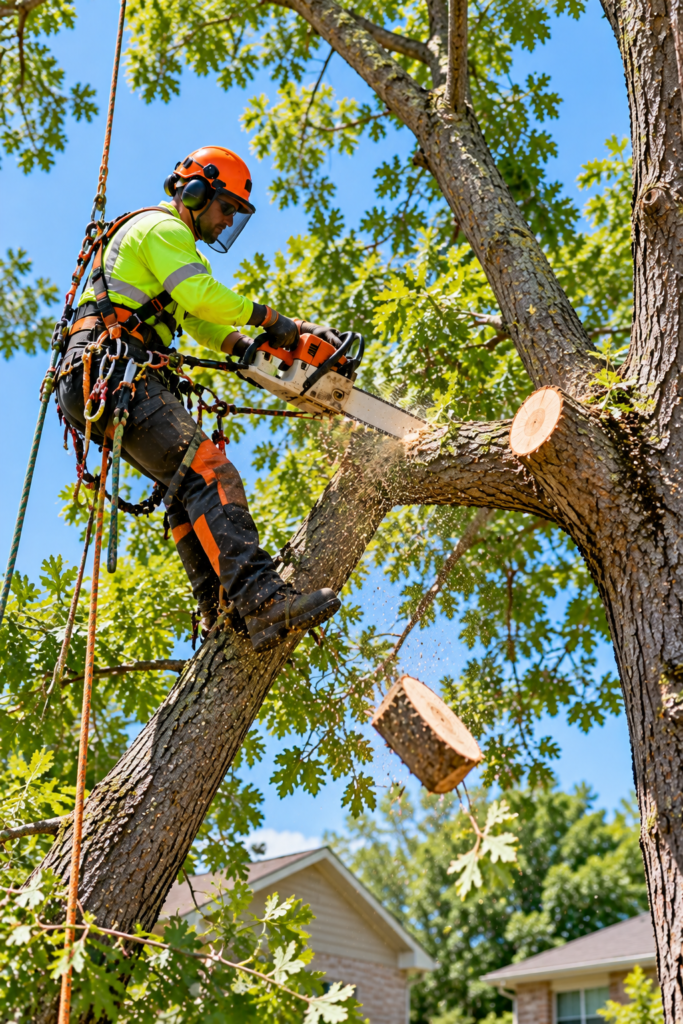
Crown reduction, sometimes called reduction pruning, is selective work that brings down the overall size of a tree’s canopy. Instead of cutting the whole crown back evenly, chosen branches are shortened so the canopy is smaller in height, spread, or both, while the tree keeps a natural outline.
The work depends on the tree’s existing branch structure. Some trees have branches that can be reduced without changing their character. Others are poor candidates because of their species, condition, or how their limbs grew. Crown reduction is not a way to make any tree any size, and some trees should only be reduced a little, if at all.
This is one of the tree services we offer for residential and commercial properties. The scope is matched to the tree and the space around it.
Crown Reduction vs. Crown Raising, Shaping, and Pruning
These services can overlap, but each has a different goal. Crown reduction deals with the overall size of the canopy: how tall and how wide it is. Crown raising works on the lower branches to make room underneath, such as over a driveway, without changing the canopy’s overall size much.
Think of a tree whose branches reach the roof. Reducing the crown shortens those long branches back toward the tree. Raising the crown would only remove low limbs and would not help. The right service depends on where the problem is.
Crown Reduction
Selectively reduces overall canopy height or spread while keeping an appropriate natural form.
Tree Shaping
Tree shaping focuses on canopy form, balance, and appearance rather than overall size.
Tree Pruning
Tree pruning is broader selective branch removal for defined goals throughout the tree.
When Crown Reduction May Be Considered
Reducing the crown may be considered when selected branches extend toward a roof, wall, or other structure, when the canopy spread has become hard to fit in the available space, or when a few branches have grown well beyond the rest of the tree. It can be an option when the goal is to keep the tree rather than remove it. It is not suitable for every tree, and the best approach depends on the tree’s structure, condition, and location.
Crown Reduction vs. Tree Topping
Crown reduction is not the same as topping. Topping cuts large branches or the main trunk back to stubs to make a tree shorter. University of Maryland Extension advises never topping a shade tree to control its size, noting that topping causes many weak shoots that may break off later and makes wood rot more likely. It also notes that when a tree has simply become too tall, removal is often the better choice. Selective reduction shortens chosen branches instead of cutting the whole crown to an arbitrary height.
Why the Amount of Reduction Matters
Texas A&M Forest Service says pruning mature trees should be done with a good reason, because each cut affects how the tree grows. It notes that heavy pruning can be very stressful and advises not removing more than 25% of a tree’s crown at one time. It also warns that removing a large limb can cause a big loss of canopy and leave a wound that may not seal, and that shortening a branch in the wrong place can lead to decay or unwanted new growth. Read the Texas A&M Forest Service guide to pruning mature trees for more.
What Affects the Estimate
The scope depends on the tree’s species, growth habit, size, and maturity, its current canopy dimensions, and its branch structure. Branch size and location and the amount of reduction being considered matter too. Nearby structures, available growing space, property access, terrain, utilities, equipment access, the number of trees, and debris handling are also part of the scope.
How the Work Usually Comes Together
- Discuss the canopy or property concern.
- Review the tree and surrounding area where appropriate.
- Identify the canopy-management goal.
- Consider the tree’s structure and site limits.
- Define the proposed scope.
- Review the estimate.
- Complete the agreed branch work.
- Handle debris as agreed in the scope.
Call 817-587-4286 to request an estimate.
Plan Your Canopy Work
Tell Us About the Tree, the Canopy Concern, and the Space Around It
Crown Reduction Questions
It is selective pruning that reduces the overall height or spread of a tree’s canopy by shortening chosen branches while keeping a natural form.
Crown reduction manages the overall size of the canopy. Crown raising removes or manages lower branches to create clearance underneath without changing overall size much.
No. Topping cuts large branches or the trunk back to stubs. University of Maryland Extension advises never topping a shade tree to control its size because topping leads to weak shoots and more wood rot.
Often, yes. Selected branches that reach too far can be shortened to reduce spread. How much is appropriate depends on the tree’s structure and condition.
No. Some trees are poor candidates, and removing too much at once can stress a tree. The amount of reduction depends on the tree, and in some cases removal may be the better option.
Tree pruning is broader selective branch removal for many kinds of goals. Crown reduction is a specific type of pruning focused on overall canopy size.
Tree size, canopy dimensions, branch size and location, the amount of reduction, access, nearby structures, terrain, the number of trees, equipment needs, and debris handling all shape the estimate.
Request a Crown Reduction Estimate
We’re dedicated to providing quality tree care for the Grapevine, TX area. We offer tree trimming, pruning, tree removal and stump grinding for homes and businesses. Our goal is to keep your property safe and your trees healthy. We plan every job with safety in mind and aim for clean, professional work. Whether you need routine care or emergency tree work, Tree Service Grapevine Texas is here to handle all your tree care needs with expertise and reliability.
CONTACT US
- Grapevine, Texas
- 817-587-4286
- info@treeservicegrapevinetx.com
- 9 AM to 6 PM (Monday to Saturday)
Copyright 2026 Tree Service Grapevine Texas| All RIghts Reserved