- 817-587-4286
- info@treeservicegrapevinetx.com
- Mon - Sat: 9:00 - 18:00
Open Up the Part of Your Property That's Grown Over
Land Clearing in Grapevine, TX
A back section of land full of scrubby trees and brush, a strip along the fence that has turned into woods, an area you want to use again. Land clearing here means opening up a defined area that holds a mix of trees, brush, and woody growth, following a scope you agree on first.
Call 817-587-4286 to request an estimate.
Describe the Area and Request an Estimate
What Do You Want the Area to Become?
The clearest projects start with the end result. You might want:
- An overgrown section opened up
- Access restored to part of the property
- Selected trees and brush removed
- Space cleared around existing features
- Unwanted woody growth cut back
- A portion of land made easier to use
Clearing vegetation is not the same as preparing land for foundations, paving, buildings, utilities, or drainage. That kind of work is separate sitework.
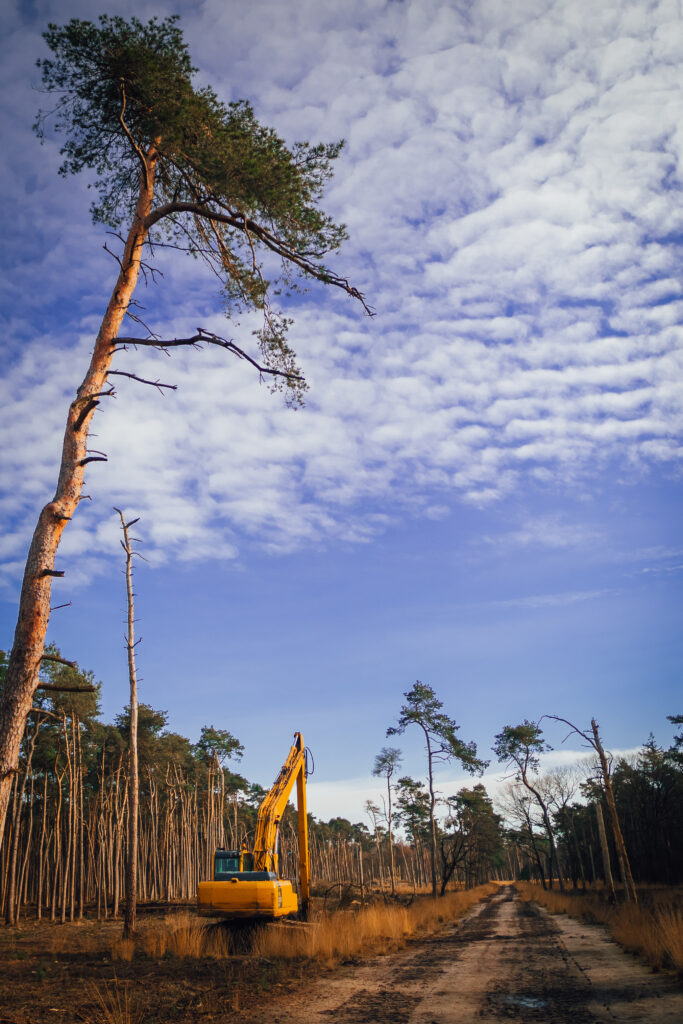
A Clearing Area Can Contain More Than Brush
Most areas that need clearing hold a mix. Walk the space and you may find established trees, small trees, woody brush, shrubs, vines, fallen branches, tree debris, old stumps, and pieces of past landscaping.
Not all of it is unwanted, and not every tree needs to come out. Sorting out the mix is the first step toward a realistic plan.
Mark What Stays Before Deciding What Goes
Before any land is cleared, decide what should remain. It is much easier to protect something that has been clearly marked.
Often Kept
Selected trees, screening plants, established landscaping, boundary vegetation, shrubs you like, and anything outside the project area.
Often Removed
Unwanted woody growth, small volunteer trees, brush, vines, and trees you have chosen to take out.
Worth Knowing
Work nearby can still affect what stays. Marking helps, but it can’t promise zero disturbance, and it is not a safety review of the trees you keep.
The Project Boundary Matters
A land clearing job needs clear edges. Before work starts, it helps to define:
- The exact clearing area
- Property edges and fences
- Neighboring areas
- Driveways and structures nearby
- Landscaping to protect
- Spots that must stay untouched
We don’t survey or determine legal property lines. If the edge of your property is uncertain or disputed, you may need documentation or a professional boundary confirmation before work near that edge.
Land Clearing vs. Brush Clearing
Brush clearing centers on brush and woody overgrowth in a defined spot, such as a fence line or corner. Land clearing looks at a broader project area that may combine brush, small trees, selected larger trees, debris, and stumps.
Even so, land clearing does not automatically mean every tree, stump, and root is removed. The scope sets what is included.
When Individual Tree Removal Becomes Part of the Plan
Larger established trees are a different kind of work than brush or small woody growth. If specific trees need to come down, tree removal may be its own part of the overall project, with its own details.
Land clearing does not automatically include unlimited tree removal. Each tree that is meant to go should be identified in the scope.
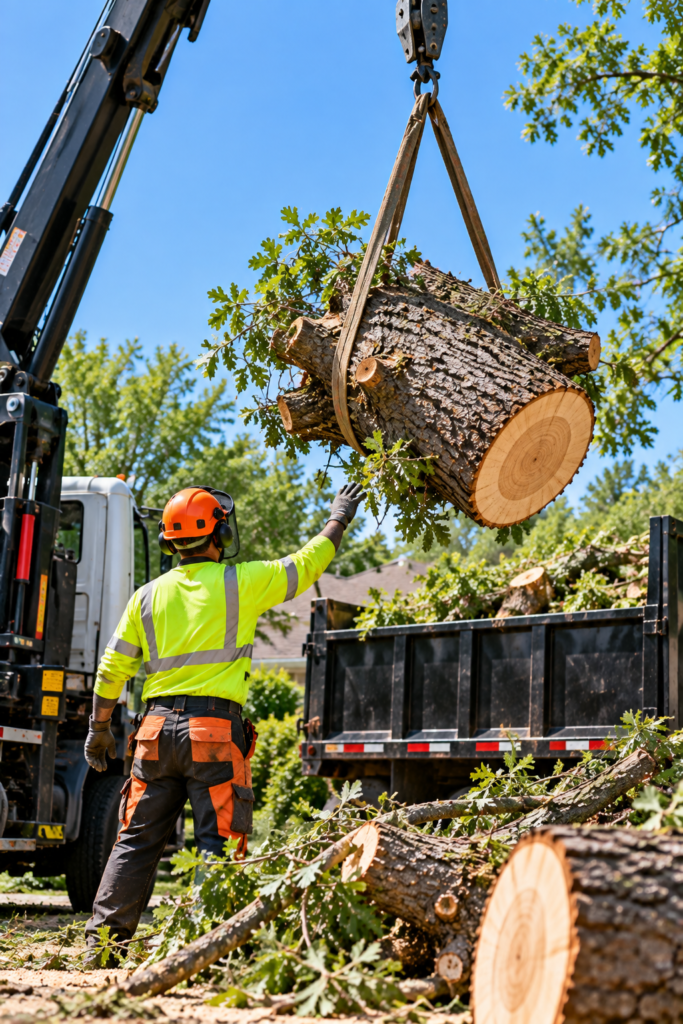
Stumps and Roots Can Change the End Result
Cutting vegetation above ground does not automatically remove stumps, root crowns, major roots, or whole root systems. Whether that matters depends on what you want the area to become.
If it does, separate work can be added: stump grinding to bring stumps down, stump removal for the stump and root crown, or tree root removal for selected roots. Grinding does not take out a whole root system, and complete root removal is not always possible or appropriate.
Access Can Define What Is Practical
How the area can be reached shapes what makes sense. Factors include:
- Gates, fences, and narrow approaches
- Structures and landscaping along the way
- Slopes and uneven terrain
- Distance from practical access
- Trees that are being kept
- Neighboring property
- Overhead or underground utilities
Access limits can change the approach, so they belong in the planning.
What May Be Below the Clearing Area?
A cleared surface can sit over things you can’t see, like underground utility lines, irrigation, drainage features, or other buried infrastructure. Point out anything you know about.
Surface clearing does not always involve digging. When a project does call for excavation, Texas 811 explains that under state law, anyone planning to dig must notify 811 two or more business days in advance (weekends and holidays excluded) so buried lines can be marked first.
Clearing Vegetation Is Not the Same as Grading the Land
This page is about vegetation and tree-related clearing. It does not include grading, excavation, soil compaction, drainage work, foundation preparation, earthmoving, trenching, demolition, engineering, or finished site preparation.
If your plans call for that kind of work, it is a separate scope for the appropriate contractor. A cleared area is not the same as a build-ready lot.
What Happens to the Material After Clearing?
Clearing produces material: brush, branches, tree sections, woody vegetation, and stump material if stump work is included. Don’t assume a particular handling method.
How that material is handled should be written into the agreed project scope before work begins.
Grapevine Rules Can Affect a Clearing Project
Grapevine has a Tree Preservation Ordinance, Section 52 of its Zoning Ordinance. The city’s Tree Preservation page links to its tree removal and tree preservation applications, and the city’s FAQ states that tree removal is not permitted without consultation with Planning Services staff.
Whether the rules apply depends on the property. As posted by the city, Section 52 covers property with designated specimen or historic trees, vacant and undeveloped property, property being redeveloped, and yard areas of developed property, excluding owner-occupied single-family homes (rentals are included). It defines a protected tree as one with a caliper of three inches or more measured 4.5 feet above ground, and it requires a removal permit for protected trees on covered property, with certain exceptions.
This is not legal advice. Before clearing that involves trees, check with Grapevine Planning Services about your specific property.
Define the Clearing Scope Before Work Begins
A short checklist helps avoid surprises:
- What exact area is included, and what is the goal?
- What stays, and what goes?
- Are established trees involved?
- Do you want stump or root work included?
- Is access restricted, and are boundaries clear?
- Are underground utilities a factor?
- How should resulting material be handled?
- Which areas must stay untouched?
What Shapes a Land Clearing Estimate?
There is no per-acre price here, because every area is different. The estimate depends on:
- How large the clearing area is, and whether it is split into several parts
- Vegetation type and density
- How many established trees are involved, and their size
- Stump and root requirements
- Terrain, access, fences, and structures
- Vegetation being kept
- Material handling and other site constraints
Call 817-587-4286 to request an estimate.
One Project Can Involve Several Different Tree Services
Land clearing often pulls together several of our tree services in Grapevine. Depending on what the area holds, the project may include brush removal for material that is already cut or piled, or tree debris removal for larger tree material, alongside the tree, stump, and brush work described above. Each piece is defined in the scope.
Define the Area, Then Request the Work
Tell us roughly how big the area is, what grows there, what you want it to become, and what should stay. Let us know whether established trees are involved, whether you want stump or root work, what access looks like, and any property constraints you know of. Call 817-587-4286 to request an estimate.
Planning a Clearing Project
Clearing a defined area that may hold trees, brush, woody growth, debris, or stumps, according to an agreed scope. What stays and what goes is set before work starts.
Not quite. Brush clearing centers on brush and woody overgrowth. Land clearing looks at a broader area that may combine several kinds of work.
It can, but not automatically. Trees meant to be removed should be identified in the scope.
Not automatically. Stump grinding or stump removal can be added as separate work if your goal needs it.
No. Grading, excavation, drainage work, and other sitework are separate from vegetation clearing.
Yes. Marking what stays is one of the first steps in planning a clearing project.
They can. Grapevine’s Tree Preservation Ordinance covers certain properties and protected trees, and whether it applies depends on the property and situation. Check with Grapevine Planning Services before removing trees.
Request a Land Clearing Estimate
We’re dedicated to providing quality tree care for the Grapevine, TX area. We offer tree trimming, pruning, tree removal and stump grinding for homes and businesses. Our goal is to keep your property safe and your trees healthy. We plan every job with safety in mind and aim for clean, professional work. Whether you need routine care or emergency tree work, Tree Service Grapevine Texas is here to handle all your tree care needs with expertise and reliability.
CONTACT US
- Grapevine, Texas
- 817-587-4286
- info@treeservicegrapevinetx.com
- 9 AM to 6 PM (Monday to Saturday)
Copyright 2026 Tree Service Grapevine Texas| All RIghts Reserved