- 817-587-4286
- info@treeservicegrapevinetx.com
- Mon - Sat: 9:00 - 18:00
Tree Work Planned Around How Your Property Runs
Commercial Tree Service in Grapevine, TX
Parking lots, storefront entrances, walkways, and service drives keep working while trees need attention. Commercial tree service here starts by defining the tree work itself, then planning it around how the property is used day to day.
Call 817-587-4286 to request an estimate.
Describe the Property and Request an Estimate
First, Understand How the Property Is Used
Tree work on a commercial property rarely happens in isolation, which is one of the ways commercial and residential tree service differ. What goes on around the work area shapes how the job is planned. Depending on the site, that might include:
- Customer and employee entrances
- Parking and drive lanes
- Pedestrian routes
- Delivery or service access
- Landscaped areas
- Outdoor spaces people use
Not every property has all of these. The point is to understand the tree work in the context of how your property actually operates.
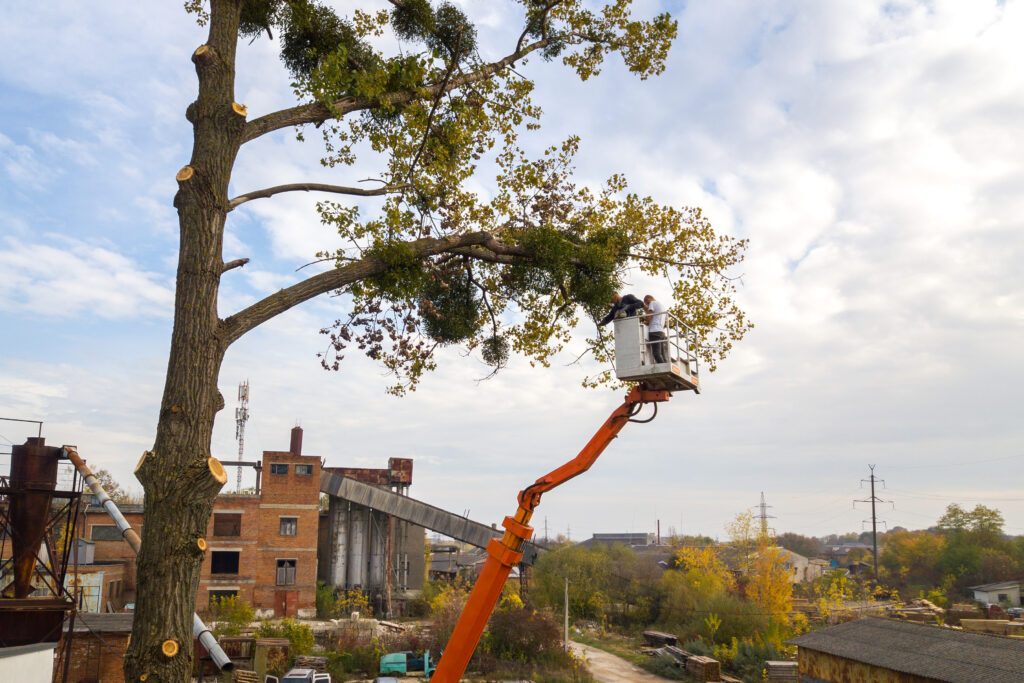
One Property Can Have Several Different Tree-Work Zones
Trees on a commercial property are often spread across very different spots:
- Near entrances
- Around parking areas
- Along property edges
- In landscaped islands and beds
- Beside buildings
- Around signs
- Along internal drives
- In less-used corners of the site
Each zone may have its own objective, and some may need nothing at all. Blanket trimming across a whole property is not the goal.
Access Is More Than Getting to the Tree
On an active property, access means thinking about everything that moves nearby: vehicles, parking spaces, customers, employees, entrances and exits, service areas, gates, and deliveries. It also means how far the work area sits from a practical point of access.
Some routes or spaces may be affected while work is underway, so it helps to talk through access early. Traffic control, parking management, and road closures are not part of the services described here.
Define the Tree Objective Before Defining the Schedule
It is tempting to start with “when can this happen?” The better first question is “what needs to be done?” Possible objectives include:
- Branch management
- Lower clearance
- Deadwood removal
- Canopy work
- Tree removal
- Stump work
- Tree debris removal
Once the work is defined, practical timing around business hours and property use can be discussed.
Match the Commercial Concern to the Right Service
Different concerns call for different services:
- Tree trimming or pruning: branch management with a clear goal
- Deadwood removal: dead branches specifically
- Crown raising: lower-branch clearance where it fits
- Crown reduction or thinning: specific canopy goals
- Commercial tree removal: taking down a whole tree when that is the agreed service
- Stump grinding or removal: stumps as a separate objective
- Tree debris removal: tree material already on the ground
A property may need one of these, several, or none.
Parking Areas Create Their Own Planning Questions
Trees beside parking spaces raise practical questions. Branches may reach toward parked cars, people walk between vehicles and buildings, and crews need room to reach the tree.
A branch over a parking area is not automatically a hazard, and the work may temporarily affect some spaces. Planning which spaces and routes are involved, and when, is part of defining the job.
Entrances and Walking Routes Need Clear Work Boundaries
Trees near building entrances, walkways, customer and employee routes, or shared outdoor areas sit right where people move. While work is underway, a clearly defined work area matters.
Continuous access through every route can’t be guaranteed, so it helps to identify which entrances or paths are most important to keep available and discuss that before work begins.
Property Edges Can Involve More Than One Party
Commercial trees often grow near neighboring businesses, fences, public areas, or adjoining private property. Work near those edges can raise questions about who owns what and where work can happen.
Surveying, setting legal property lines, settling ownership disputes, legal advice, and arranging permission from neighbors are not part of the services described here, and access to adjacent property shouldn’t be assumed. If an uncertain property line affects the work, the responsible party may need documentation or a qualified survey professional.
Multiple Trees Do Not Automatically Need the Same Work
A property with many trees does not need the same treatment applied to all of them for the sake of uniformity. The scope should follow the actual objective for each tree or zone.
One Tree
Needs lower branches managed for clearance over a walkway.
Another Tree
Has dead branches that are the only real concern.
The Rest
May need no work at all, or a different service entirely.
Tree Work Around Signs and Buildings Needs a Defined Objective
Branches near signs, building edges, entrances, or other features often prompt a call. The work should follow an agreed objective, such as clearance from a wall or roof edge.
If sign visibility is the goal, that should be stated as the objective, not assumed. Cutting branches just to expose a sign, or assuming a tree next to a building must come out, isn’t good practice.
Commercial Tree Service Does Not Mean a Maintenance Contract
Requesting commercial tree work here does not mean signing up for an ongoing agreement. This page is not about annual or monthly service contracts, property-management or HOA agreements, municipal or corporate contracts, or portfolio-wide maintenance programs.
You can ask for an estimate on a clearly defined scope, one project at a time.
Grapevine Commercial Properties and Local Requirements
Grapevine’s Tree Preservation rules, Section 52 of the Zoning Ordinance, can reach commercial sites. The version posted on the city’s Tree Preservation page applies to the yard areas of developed property, with only owner-occupied single-family homes excluded from that part. It also covers property being redeveloped, including additions and alterations.
What the rules require depends on the work. The same section says it is not intended to require a tree permit for reasonable pruning by or for the owner when unrelated to construction, but removing protected trees on covered property calls for a permit, with some exceptions. It also makes topping unlawful as a normal practice, and it asks owners of trees next to a public street to keep at least 10 feet of clearance above the pavement or curb.
This is not legal advice. Check with Grapevine Planning Services about your property and project.
What About Power Lines or Other Utilities?
If branches are touching or close to energized power lines, don’t try to cut them, and keep people away. Contact the electric utility, or emergency services if there is immediate danger.
Utility line clearance, utility vegetation management, and moving utilities are not part of the services described here.
Resulting Material Should Be Part of the Scope
Commercial tree work can leave branches, limbs, logs or tree sections, stump material, and other woody debris. What happens to that material should be spelled out in the estimate or agreed scope, not assumed.
If you have expectations about where material goes or how long it stays on site, raise them up front.
What Shapes a Commercial Tree Service Estimate?
The estimate follows the scope. Factors include:
- The number of trees and work zones
- The service requested and tree size
- Where the branches of concern are
- Access, parking constraints, gates, and fences
- Nearby buildings, entrances, and walkways
- Terrain
- Stump requirements and resulting material
- Practical timing around how the property is used
Call 817-587-4286 to request an estimate.
Related Services for a Defined Commercial Scope
For a closer look at specific work, see tree trimming, deadwood removal, tree removal, and stump grinding. You can also browse all of our tree services in Grapevine.
Define the Property, the Work Area, and the Tree Need
Tell us the property type, which trees are involved, and the service you have in mind if you know it. Describe where each work area is, any parking or access concerns, nearby entrances and buildings, gates or fences, whether stumps are included, how you'd like material handled, and any timing considerations. Call 817-587-4286 to request an estimate.
Planning Tree Work Around a Commercial Property
Yes, the work can be planned with property use in mind. Some areas may still be affected while work is underway, so it helps to discuss access early.
No. Each tree or zone should be scoped by its own objective, and some may need nothing.
Yes. A single estimate can cover several work zones, each with its own defined task.
That’s common. The scope should note which spaces and routes may be affected. Branches over parking aren’t automatically hazardous.
Only if it’s part of the agreed scope. Stump grinding is a separate service.
They can. Grapevine’s Tree Preservation section covers the yard areas of developed commercial property and certain protected trees. Check with Grapevine Planning Services.
No. Estimates are for a defined scope of work, not an ongoing agreement.
Request a Commercial Tree Service Estimate
We’re dedicated to providing quality tree care for the Grapevine, TX area. We offer tree trimming, pruning, tree removal and stump grinding for homes and businesses. Our goal is to keep your property safe and your trees healthy. We plan every job with safety in mind and aim for clean, professional work. Whether you need routine care or emergency tree work, Tree Service Grapevine Texas is here to handle all your tree care needs with expertise and reliability.
CONTACT US
- Grapevine, Texas
- 817-587-4286
- info@treeservicegrapevinetx.com
- 9 AM to 6 PM (Monday to Saturday)
Copyright 2026 Tree Service Grapevine Texas| All RIghts Reserved