- 817-587-4286
- info@treeservicegrapevinetx.com
- Mon - Sat: 9:00 - 18:00
Selective Branch Work for Crowded Canopies, Without Shrinking the Tree
Crown Thinning in Grapevine, TX
A canopy that looks thick and crowded does not always need work. Sometimes, though, branches pile up in one area, rub against each other, or grow in ways that deserve a closer look. Crown thinning removes selected branches to manage canopy density while leaving the tree at roughly its natural size and form.
For crown thinning in Grapevine TX, call 817-587-4286 and tell us what you are seeing in the tree.
Talk Through Your Canopy Concern
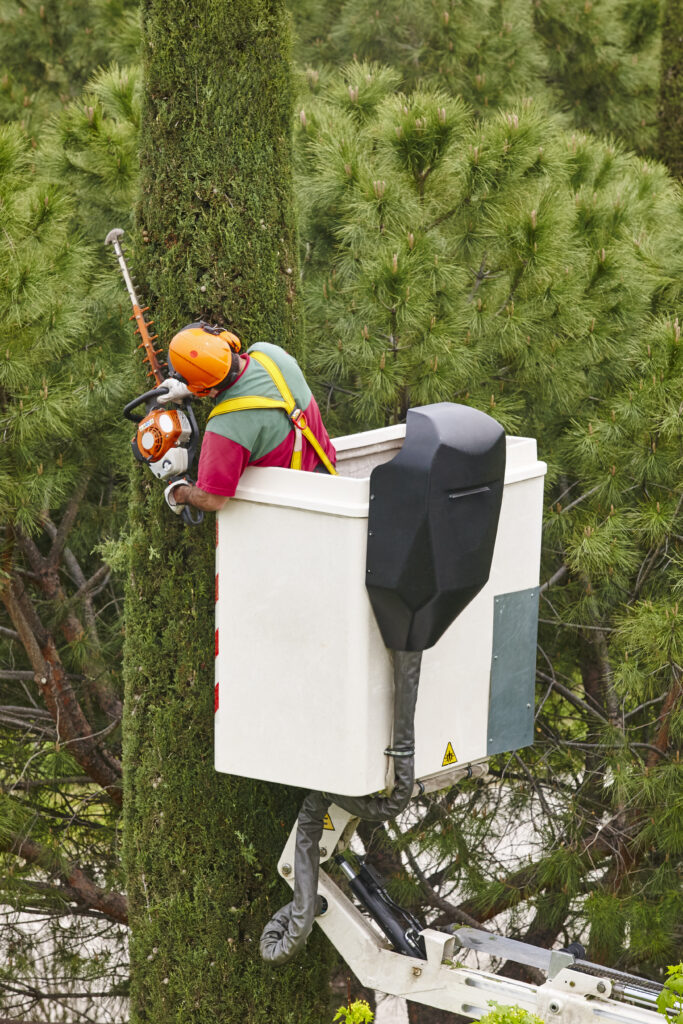
Managing a Dense Tree Canopy
Picture a shade tree where branches crowd together on one side, a few limbs cross and rub, and small sprouts fill gaps near the branch tips. Crown thinning deals with that kind of density. A limited number of chosen branches come out so the remaining ones have more room, while the tree keeps its overall height, spread, and outline.
The key word is selective. Thinning is not a matter of clearing out the middle of the tree or making it look sparse. Every branch that stays is still doing work for the tree, so the goal is to remove only what serves a clear purpose.
Where Selective Thinning Can Make Sense
Thinning may be worth discussing when certain branches are crowded, when crossing or rubbing limbs are part of the concern, or when growth is concentrated in one area of the canopy. Your own goals for the property matter too. A dense look alone does not prove a tree needs pruning, and the right scope depends on the actual tree. Crown thinning is one of the tree services we offer for residential and commercial properties.
Keeping the Tree’s Natural Size and Form
Crown thinning works mostly inside the existing canopy. It focuses on density and branch distribution rather than making the tree noticeably shorter or narrower. Done selectively, the tree should still look like itself afterward, with foliage spread through the canopy instead of bunched at the tips.
That focus is what sets it apart from other canopy services. If the concern is how the canopy looks and balances, tree shaping may be a better fit. If several goals overlap, a broader tree pruning scope can combine them.
Thinning: Density
Selected branches come out to ease crowding, while overall height and spread stay about the same.
Reduction: Size
Crown reduction shortens chosen branches to bring down the canopy’s overall height or spread.
Raising: Clearance
Crown raising addresses lower branches so there is more room beneath the canopy.
Why More Branch Removal Isn’t Always Better
It is tempting to think a more open tree is a healthier tree. Texas A&M Forest Service says routine thinning does not always make trees healthier. Trees need their leaves to produce the sugar they use to grow, and removing too many leaves can reduce growth and energy reserves. Heavy pruning can be very stressful for a tree.
Penn State Extension describes crown-density work as removing crowded, weakly attached, or low-vigor branches, and it warns against lion-tailing. That is when too many interior branches are removed, leaving growth and leaves bunched at the branch ends. Careful thinning keeps foliage spread through the canopy. Thinning also does not storm-proof a tree or prevent branch failure.
Planning Thinning Around Your Grapevine Property
Timing is part of good planning. Texas A&M AgriLife Extension’s Earth-Kind landscaping guidance says the best time to prune most plants is generally late winter or early spring before growth begins, and the least desirable time is right after new spring growth develops. It also advises limiting pruning late in summer, since new growth may not harden off before cold weather. Oaks have their own timing concerns because of oak wilt, so ask about them specifically. The Earth-Kind guide to proper pruning techniques covers timing in more detail.
What Shapes the Scope of the Work?
Not every factor applies to every job. A small ornamental tree with one crowded area is a different project from a large, mature shade tree. Tree size, species and growth habit, maturity, how dense the canopy is, branch structure, and the size and location of the branches involved all play a part. On the property side, access, nearby structures, utilities, terrain, room for equipment, the number of trees, and how debris will be handled can shape the plan.
From Canopy Concern to a Defined Scope
It usually starts with you describing what you are noticing. From there, the tree and property can be reviewed where it makes sense, and the goal gets clearer, such as easing crowding in one section or dealing with rubbing limbs. The branches and areas involved are considered, a proposed scope is written up, and you review the estimate. Once you agree, the work is completed and debris is handled the way the scope describes.
What Goes Into a Crown Thinning Estimate?
The estimate reflects tree size, canopy density, the size and location of the branches involved, access, nearby structures, how much selective work is planned, the number of trees, equipment needs, and debris handling. Tell us what you are noticing in the canopy and what you would like addressed, then call 817-587-4286 to request an estimate.
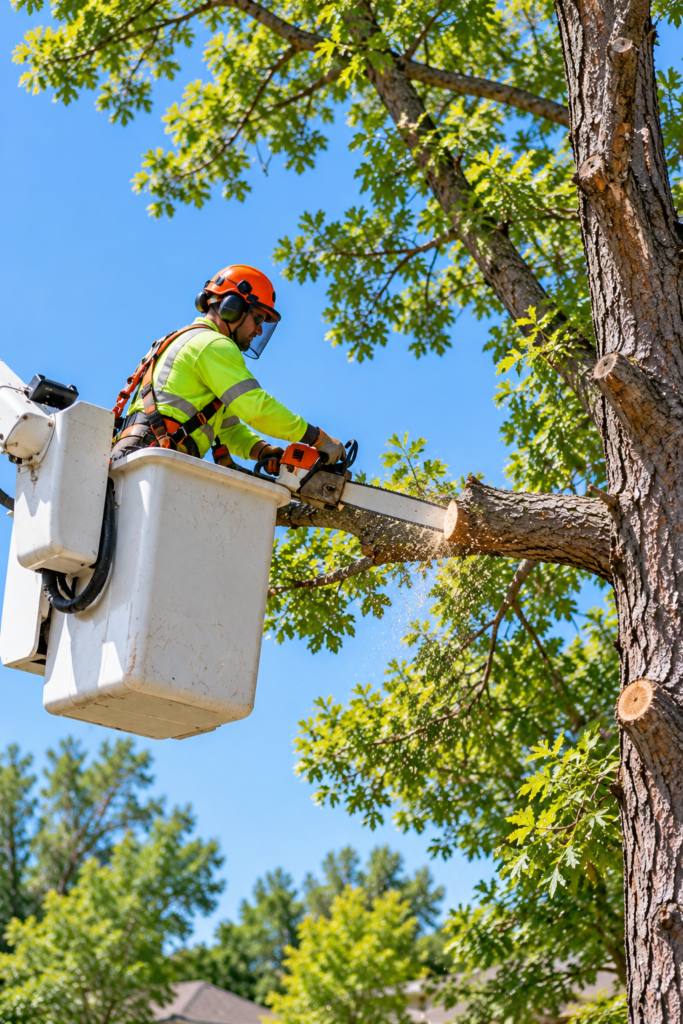
Let’s Talk About the Canopy You’re Looking At
Share What You See, Where on the Tree It Is, and What Is Nearby
Questions Grapevine Property Owners Ask
No. Many healthy trees naturally have full canopies. Whether thinning makes sense depends on the tree, how its branches are arranged, and what you want to accomplish.
Not usually. Thinning focuses on density, so overall height and spread generally stay about the same. Making the canopy smaller is the goal of crown reduction.
Thinning eases crowding inside the canopy. Reduction shortens selected branches to bring down the tree’s overall height or spread.
Not quite. Tree trimming usually means broader, routine branch and canopy upkeep. Thinning is a narrower, selective task focused on density.
Only selectively. Stripping out most interior branches, known as lion-tailing, leaves foliage bunched at the branch ends, and Penn State Extension advises avoiding it.
It can. Texas A&M Forest Service notes that trees need their leaves to make food and that heavy pruning can be very stressful. More removal is not automatically better.
Tree size, species, canopy density, branch structure and location, access, nearby structures, the number of trees, and debris handling can all affect the scope.
Ask About Thinning Your Tree’s Canopy
We’re dedicated to providing quality tree care for the Grapevine, TX area. We offer tree trimming, pruning, tree removal and stump grinding for homes and businesses. Our goal is to keep your property safe and your trees healthy. We plan every job with safety in mind and aim for clean, professional work. Whether you need routine care or emergency tree work, Tree Service Grapevine Texas is here to handle all your tree care needs with expertise and reliability.
CONTACT US
- Grapevine, Texas
- 817-587-4286
- info@treeservicegrapevinetx.com
- 9 AM to 6 PM (Monday to Saturday)
Copyright 2026 Tree Service Grapevine Texas| All RIghts Reserved