- 817-587-4286
- info@treeservicegrapevinetx.com
- Mon - Sat: 9:00 - 18:00
One Lot, One Plan for What Stays and What Goes
Lot Clearing in Grapevine, TX
Whether it’s a residential lot that has grown wild or a commercial parcel with trees and brush crowding the edges, lot clearing starts with the property in front of you. The work covers the trees, brush, and woody growth you choose, inside the lot lines, based on a scope agreed up front.
Call 817-587-4286 to request an estimate.
Tell Us About the Lot and Request an Estimate
What Does the Lot Look Like Today?
No two lots start in the same condition. One might have a few scattered trees and an open center. Another might be thick with brush, vines, and small woody growth. Many sit somewhere in between, with a mix of:
- Scattered or clustered trees
- Dense brush and small woody growth
- Vines
- Fallen branches and tree debris
- Old stumps
- Existing landscaping
- Open patches mixed with overgrowth
Starting with the lot’s current condition keeps the plan grounded in what is actually there. Not every lot is heavily wooded, and not everything growing on it is unwanted.
Clear the Whole Lot or Only Part of It?
Lot clearing does not have to mean stripping the entire property. Plenty of projects focus on one piece of a lot, such as:
- One side or the rear section
- The perimeter
- Selected overgrown patches
- An access path or drive area
- The space around existing features
Broader clearing can make sense in some cases. Either way, the included area should be settled before any work begins, and clearing more than you need is rarely the goal.

Decide What Stays Before Work Starts
Walk the lot and flag what you want to keep. That might be:
- Selected established trees
- Screening vegetation or shrubs
- Landscaping
- Growth along certain lot edges
- Anything outside the clearing zone
Keeping a tree is not the same as confirming it is sound, and nearby work can still affect what stays. Marking your keepers simply makes the plan clearer.
Lot Lines Are Not Something to Guess
Clearing near the edge of a lot raises practical questions. Where exactly does the property end? Who owns the fence, or the tree growing right on the line? What about growth spilling over from next door?
We don’t survey land, set legal boundaries, settle property disputes, or decide who owns a disputed tree. If the work depends on an uncertain property line, you may need property documents or a qualified survey professional to confirm it before work proceeds.
Lot Clearing vs. Land Clearing
The two terms overlap. Lot clearing frames the work around one specific residential or commercial lot and the vegetation inside its boundaries. Land clearing is a broader term for opening up defined areas of land with mixed vegetation.
If your project is tied to a particular parcel, with its own lines, neighbors, and access, you are likely thinking about lot clearing.
Trees, Brush, and Debris Are Different Parts of a Lot
Most lots hold several kinds of material, and each one lines up with a different kind of work. A lot clearing scope may combine some of them, but none is automatically included.
Standing Trees
Established trees chosen for removal may involve tree removal. Stumps left behind may call for stump grinding or stump removal.
Brush and Overgrowth
Rooted brush and woody growth may involve brush clearing. Brush that is already cut may fit brush removal.
Material on the Ground
Fallen limbs and other tree material may involve tree debris removal, depending on what is there.
The Street, Driveway, and Gate Can Change the Plan
How crews and material get to and from the work area matters on every lot. Consider:
- Street frontage and where vehicles can park
- Driveway access and whether it must stay open
- Gates, fences, and narrow side access
- Structures and landscaping in the way
- Neighboring property
- Slopes and uneven ground
- How far the back of the lot is from the street
Some corners of a lot are simply harder to reach than others, and that can change what is practical.
Stumps Can Change How "Cleared" the Lot Feels
Taking vegetation down above ground does not make stumps disappear. On a lot you plan to mow, walk, or landscape, leftover stumps can make the space feel only half finished.
If that matters, stump grinding or stump removal can be requested as separate work, and tree root removal can be considered if specific roots are a concern. Grinding does not take out all roots, stump removal does not extract every root, and none of this is automatically part of lot clearing.
Look Above and Below the Work Area
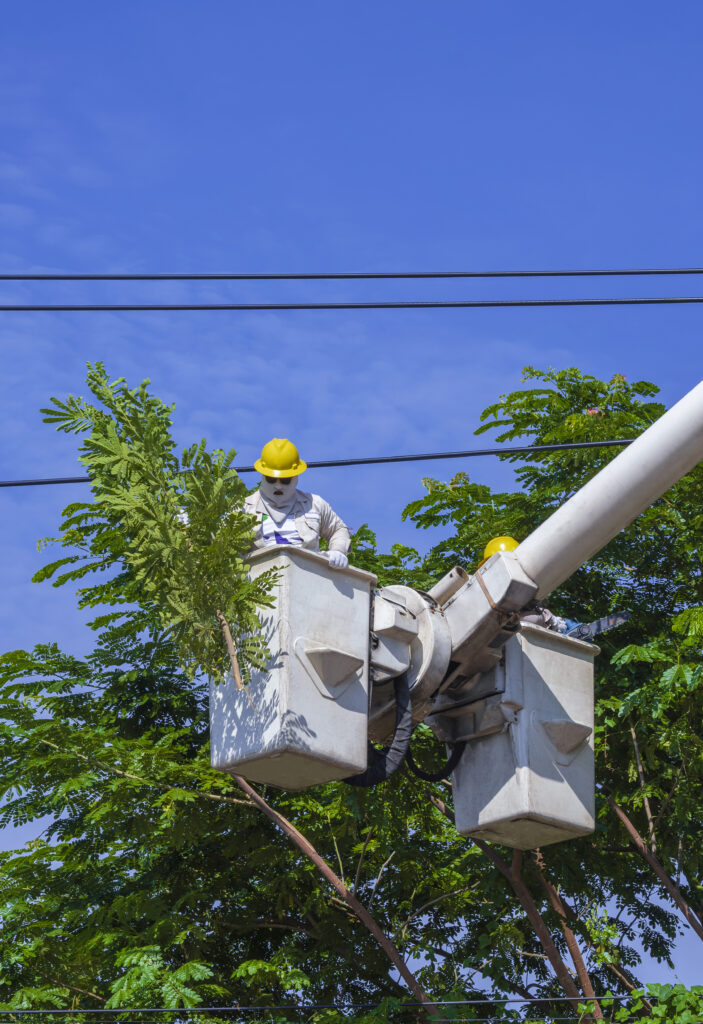
Above: Overhead utility lines, nearby structures, and trees or features on neighboring lots can all affect how work is done.
Below: Underground utilities, irrigation, and other buried lines may run under the lot. Most brush and tree cutting stays above ground. When a job does call for digging, Texas 811 points out that Texas law requires a call to 811 two business days or more ahead of any excavation, even on your own property.
A Cleared Lot Is Not Automatically a Graded Lot
Removing trees and brush changes what grows on a lot. It does not level the ground or prepare it for building. Vegetation clearing is separate from grading, excavation, earthmoving, soil compaction, drainage installation, trenching, foundation preparation, demolition, engineering, surveying, and construction site preparation.
If your plans for the lot include that kind of work, it will need its own scope with the appropriate professionals.
What Happens to Cut Trees and Brush?
Clearing a lot leaves cut trees, limbs, and brush behind. What happens to that material next is its own part of the plan.
Don’t assume a particular method. Spell out in the agreed scope how the resulting woody material will be handled, so everyone is working from the same expectations.
Check Grapevine Requirements Before Assuming a Lot Can Be Cleared
Tree removal in Grapevine can fall under Section 52 (Tree Preservation) of the city zoning rules. The city’s Tree Preservation page lists its tree removal and tree preservation applications.
Lot owners should look closely at who the rules cover. The version of Section 52 posted by the city applies to vacant and undeveloped property and property being redeveloped, among others, and it does not allow clear cutting of protected trees on a property before a building permit is issued, except in limited situations. Certain species under 10 caliper inches, such as hackberry and mesquite, are exempt unless they are in a floodplain or watercourse. Yard areas of developed, owner-occupied single-family homes are excluded from the section’s general coverage, while rental property is included.
This is not legal advice. Talk with Grapevine Planning Services about your lot before assuming trees can be removed.
Define the Lot Clearing Scope in Plain Language
Before work starts, make sure you can answer these:
- Which part of the lot is included?
- What should remain?
- Which trees, if any, are part of the request?
- Is the brush still growing or already cut?
- Should stump or root work be added?
- Are the lot lines known?
- Are access points limited?
- Are utilities a factor?
- How should the cut material be handled?
What Shapes a Lot Clearing Estimate?
Lot clearing is priced by scope, not by a set rate. The main factors include:
- How much of the lot is included
- How dense the vegetation is and how much brush there is
- The number and size of trees involved
- Existing debris on the ground
- Stump and root requests
- Access, terrain, fences, and gates
- Nearby structures and vegetation being kept
- Separate work areas and material handling
Call 817-587-4286 to request an estimate.
When One Lot Involves More Than One Service
A single lot can call for a few different kinds of work. Drawing on our tree services in Grapevine, the scope may bring together tree removal for selected trees, brush clearing for standing overgrowth, and stump work where it matters to the result. Each piece is spelled out so you know what is included.
Show Us the Lot and the Part You Want Changed
Tell us roughly how big the lot or clearing area is, which part needs work, what's growing there, and what you'd like to keep. Mention whether larger trees or stumps are involved, where the access points are, and any boundary or utility concerns you know about. Call 817-587-4286 to request an estimate.
Questions Before Clearing a Lot
No. The scope can cover the whole lot or just part of it, and anything you want to keep can be marked to stay.
Yes. Mark the trees you want to keep before work starts. Nearby work can still affect them, so it helps to talk about them up front.
They overlap. Lot clearing centers on one specific lot and its boundaries, while land clearing is a broader term for clearing defined areas of land.
No, not unless you ask for it. Stumps can be ground down or removed as a separate part of the job.
No. Clearing vegetation is separate from grading, excavation, drainage, and other site preparation.
Not a tree service. If a lot line is uncertain, property documents or a qualified survey professional can help confirm it.
Yes, depending on the lot. Grapevine’s Tree Preservation section covers certain properties and protected trees. Check with Grapevine Planning Services about your lot.
Request a Lot Clearing Estimate
We’re dedicated to providing quality tree care for the Grapevine, TX area. We offer tree trimming, pruning, tree removal and stump grinding for homes and businesses. Our goal is to keep your property safe and your trees healthy. We plan every job with safety in mind and aim for clean, professional work. Whether you need routine care or emergency tree work, Tree Service Grapevine Texas is here to handle all your tree care needs with expertise and reliability.
CONTACT US
- Grapevine, Texas
- 817-587-4286
- info@treeservicegrapevinetx.com
- 9 AM to 6 PM (Monday to Saturday)
Copyright 2026 Tree Service Grapevine Texas| All RIghts Reserved